

 stuart@skooldemy.com
Let me tell you straight up: I’ve built my entire digital business around creating online courses as an Udemy instructor. When I first uploaded my course in 2016, I thought I’d struck gold overnight. Reality check? It took six months to earn my first $100. But here’s the kicker – that same “beginner” program now brings in $8k/month passively.
The platform’s 49 million-strong audience is tempting, but here’s what nobody tells you. While launching is free and simple, standing out in the crowded marketplace is not. That’s where the real work begins. I’ve seen colleagues earn $1,000 for their lifetime, while others have exceeded $3 million.
This review isn’t about sugarcoating. We’ll dig into why some creators thrive while others barely break even. From Udemy’s pricing wars to their infamous sales model, I’ll show you exactly how the system works behind those shiny success stories.
Key Takeaways
- Global reach comes with intense competition – quality content alone isn’t enough.
- Earnings range from modest side income to life-changing amounts, depending on the strategy.
- Platform promotions can make or break your course visibility
- Successful creators treat Udemy as one stream in their income portfolio
- Course updates and student engagement directly impact long-term success
Understanding Udemy’s Online Learning Marketplace
Back in 2010, three friends launched a digital classroom that would become the Walmart of online education. Today, their creation hosts more courses than most universities have library books. Let me break down why this matters for content creators.
From Garage Startup to Global Classroom
The platform’s expansion feels like watching a viral TikTok trend. What started as a simple idea now serves 49 million students across 180 countries. Courses range from Python coding to sourdough baking – literally any “I want to learn…” moment you can imagine.
Here’s what shocked me: Over 680 million enrollments mean students aren’t just browsing – they’re buying. Enterprise clients, such as Apple and Netflix, utilise these courses for employee training. That corporate reach? Pure gold for visibility.
Numbers Don’t Lie
Let’s crunch real stats:
- 185,000+ courses available (up 400% since 2016)
- 75 language options breaking the English barrier
- 10,500 companies paying for team access
The marketplace model operates similarly to Amazon for education. Students filter by ratings, price, and topic. For creators, this means competing with over 70,000 peers while benefiting from Udemy’s $100M+ annual advertising spend.
My 2016 mistake? Assuming “build it and they’ll come.” Now I know – success here requires understanding both the platform’s scale and its limitations. Next, we’ll explore how to stand out in this crowded digital bazaar.
Benefits for Both New and Experienced Instructors
When I first dipped my toes into online teaching, I nearly drowned in hosting fees and tech headaches. That’s why this platform’s model feels like finding a life raft, especially if you’re balancing a day job while building your expertise.

Free Course Hosting and No Upfront Costs
Here’s the game-changer: zero financial barriers to entry. Unlike building your own site (which I’ve done and wasted $1,200), you can launch tomorrow without spending a dime. The platform covers all hosting costs while handling payment processing – I still remember my shock when my first student enrolled without me lifting a finger in marketing.
Three reasons this rocks:
- Test niche ideas risk-free (my failed knitting course cost nothing)
- Scale endlessly – upload 1 course or 20 without extra fees
- Keep 100% control over content updates and pricing
Access to a Massive Student Base and Sales Opportunities
My friend Sarah’s “Python for Grandma” course reached 2,000 enrollments in its first week. That’s the power of tapping into 49 million hungry learners. While building your own audience takes years, here you’re instantly visible to:
- Corporate teams needing training (hello, recurring revenue)
- International students across 75 languages
- Bargain hunters during frequent platform-wide sales
Pro tip: Use this built-in traffic to test concepts fast. My bestselling photography course began as an experiment on Udemy before I expanded it elsewhere. The instant feedback loop? Priceless.
Udemy Instructor Income Potential and Revenue Model
My first payout notification made me spit out my coffee – $4.72 after three weeks. That’s when I realised this game isn’t about luck, but understanding the money mechanics. Let’s peel back the curtain on how commissions really work.
Commission Structures and Payment Methods Explained
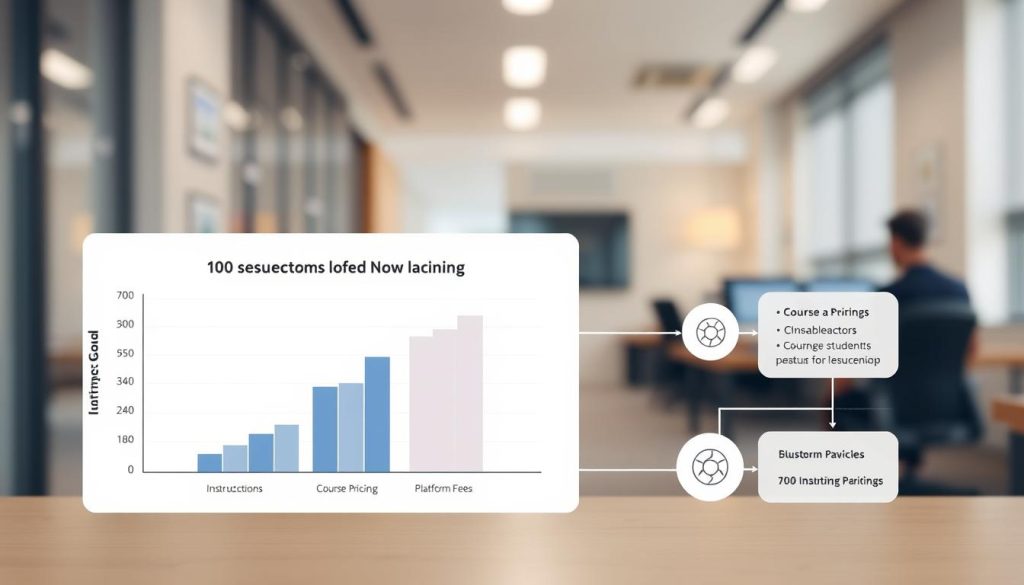
Your earnings fluctuate significantly based on who brings in the buyer. Here’s the breakdown that changed my strategy:
| Traffic Source | Your Cut | Sale Price Range | Best For |
|---|---|---|---|
| Udemy Search/Google | 50% | $10-$20 | New creators |
| Platform Ads | 25% | $9.99-$15 | Visibility boosts |
| Your Marketing | 97% | $20-$200 | Established brands |
That 97% slice? It comes when you drive sales through custom coupons. My friend Jessica cleared $ 8,000 per month using her email list this way. But there’s a catch – you need existing audience leverage.
Differentiating Between Organic Sales and Self-Marketing Earnings
Platform-driven sales feel like found money, but they’re unpredictable. During Black Friday last year, my organic sales tripled…then crashed in January. Self-promoted courses? Steady 30% of my income.
- Organic: Great for testing course concepts
- Udemy ads: Useful for ranking boosts
- Self-marketing: Builds long-term value
The real gold mine? Udemy for Business. They pay based on watch time from corporate clients. My 3-hour Excel course generates $400 per month alone. Pro tip: Bundle short courses into learning paths to maximise this stream.
Step-by-Step Guide to Becoming a Successful Udemy Instructor

I almost torpedoed my first online class by teaching advanced Excel to absolute beginners. That facepalm moment taught me this golden rule: success starts long before you hit “record.” Let’s break down the roadmap I wish I’d had when launching my debut program.
Choosing Your Topic and Identifying Your Learner Audience
Your expertise means nothing if nobody needs it. Start by asking: “What problem can I solve better than YouTube tutorials?” My friend made $ 23,000 teaching nurses how to use spreadsheet formulas – a niche she discovered through her hospital coworkers’ complaints.
Three questions to find your sweet spot:
- What skills do people repeatedly ask me to teach them?
- Which topics have growing search trends but limited quality content?
- Can I explain this concept to a 12-year-old during a car ride?
Establishing Learning Objectives and Crafting Your Course Outline
My “Photoshop for Bloggers” course flopped until I replaced vague goals like “Learn design basics” with “Create Pinterest-worthy graphics in 15 minutes.” Students want concrete outcomes they can showcase.
Build your outline like a recipe:
- Start with 3-5 measurable skills students will master
- Chunk content into 5-8 minute videos (attention spans are short)
- Mix theory with hands-on projects (my baking courses include PDF checklists)
Pro tip: Use free tools like Otter.ai to transcribe practice sessions. You’ll spot rambling sections and awkward pauses that need editing before final recording.
How to Create Engaging and High-Quality Courses
I once recorded an entire course with my ceiling fan clattering in the background. Students roasted me in reviews until I re-shot every lesson. That painful lesson taught me: production quality makes or breaks the perceived value of your content.
Best Practices in Video and Audio Production
Start with crystal-clear audio. Use free tools like Audacity to remove background noise. Record screen captures and voiceovers separately – this allows you to fix mistakes without having to redo both tracks. My secret weapon? A $20 USB microphone that makes beginners sound pro.
For video content, lighting matters more than camera quality. Face a window or buy softbox lights ($50 on Amazon). Keep clips under 7 minutes – attention spans tend to fade quickly. I add animated text overlays in DaVinci Resolve (free version) to highlight key points.
Always include face-to-camera moments. Students connect 34% faster when they see your expressions. Use OBS Studio to toggle between screen share and webcam. Pro tip: Smile when explaining complex topics – it subconsciously boosts learning retention.
Your course landing page needs snackable preview videos. Mine show 90-second teasers with bold text, such as “Master Excel in 3 Hours.” Test different thumbnails and titles using Udemy’s analytics. Remember: Great content stays buried without compelling packaging.
FAQ
Can I really make money teaching on Udemy without experience?
How much control do I have over pricing my courses?
Do I need professional video equipment to start?
What’s the biggest mistake new instructors make?
How long does it take to see real income?
Can I really make money teaching on Udemy without experience?
How much control do I have over pricing my courses?
Do I need professional video equipment to start?
What’s the biggest mistake new instructors make?
How long does it take to see real income?
FAQ
Can I really make money teaching on Udemy without experience?
Absolutely! I started with zero teaching credentials. The platform lets anyone create courses—your expertise matters more than formal qualifications. Just focus on delivering clear value through actionable lessons. Some top earners are self-taught experts in niche fields like Excel hacks or meditation techniques.
How much control do I have over pricing my courses?
Udemy offers frequent discounts (sometimes up to 90% off), which initially frustrated me. However, their promotions drive massive enrollment. You earn based on the sale price, so focus on volume. For complete control, use their affiliate program or share coupon codes through your own channels.
Do I need professional video equipment to start?
Not at all! My first course utilised a USB microphone and free editing software, such as DaVinci Resolve. Clear audio matters most—students forgive basic visuals if your content delivers. Upgrade gear gradually as you earn. I now use a 0 ring light, but still record on my smartphone sometimes.
What’s the biggest mistake new instructors make?
Creating courses they think people want. I wasted months on a Python course before checking search trends. Use Udemy’s Marketplace Insights tool to spot high-demand topics with low competition. My bestseller? A boring-but-lucrative “QuickBooks for Etsy Sellers” tutorial.
How long does it take to see real income?
A> It’s a marathon, not a sprint. My first course was made in Month 1. By Month 6, consistent updates and student reviews pushed it to
FAQ
Can I really make money teaching on Udemy without experience?
Absolutely! I started with zero teaching credentials. The platform lets anyone create courses—your expertise matters more than formal qualifications. Just focus on delivering clear value through actionable lessons. Some top earners are self-taught experts in niche fields, such as Excel hacks or meditation techniques.
How much control do I have over pricing my courses?
Udemy offers frequent discounts (sometimes up to 90% off), which initially frustrated me. However, their promotions drive massive enrollment. You earn based on the sale price, so focus on volume. For complete control, use their affiliate program or share coupon codes through your own channels.
Do I need professional video equipment to start?
Not at all! My first course utilised a $50 USB microphone and free editing software, such as DaVinci Resolve. Clear audio matters most—students forgive basic visuals if your content delivers. Upgrade gear gradually as you earn. I now use a $200 ring light, but still record on my smartphone sometimes.
What’s the biggest mistake new instructors make?
Creating courses they think people want. I wasted months on a Python course before checking search trends. Use Udemy’s Marketplace Insights tool to spot high-demand topics with low competition. My bestseller? A boring-but-lucrative “QuickBooks for Etsy Sellers” tutorial.
How long does it take to see real income?
A> It’s a marathon, not a sprint. My first course made $23 in Month 1. By Month 6, consistent updates and student reviews pushed it to $1,200/month. Now, with eight courses, I earn $ 6,000-$9,000 monthly. Treat it like a business—optimise titles, add quizzes, and engage in discussions daily.
Are Udemy certificates actually valuable to students?
A> Surprisingly, yes! Corporate teams often buy bulk enrollments for soft skills training. One project management course I made got adopted by 12 companies last year. Focus on skills that boost careers—time management, AI tools, or industry-specific software. Certificates can also serve as marketing tools for their resumes.
,200/month. Now, with eight courses, I earn $ k monthly. Treat it like a business—optimise titles, add quizzes, and engage in discussions daily.
Are Udemy certificates actually valuable to students?
A> Surprisingly, yes! Corporate teams often buy bulk enrollments for soft skills training. One project management course I made got adopted by 12 companies last year. Focus on skills that boost careers—time management, AI tools, or industry-specific software. Certificates can also serve as marketing tools for their resumes.



Add comment